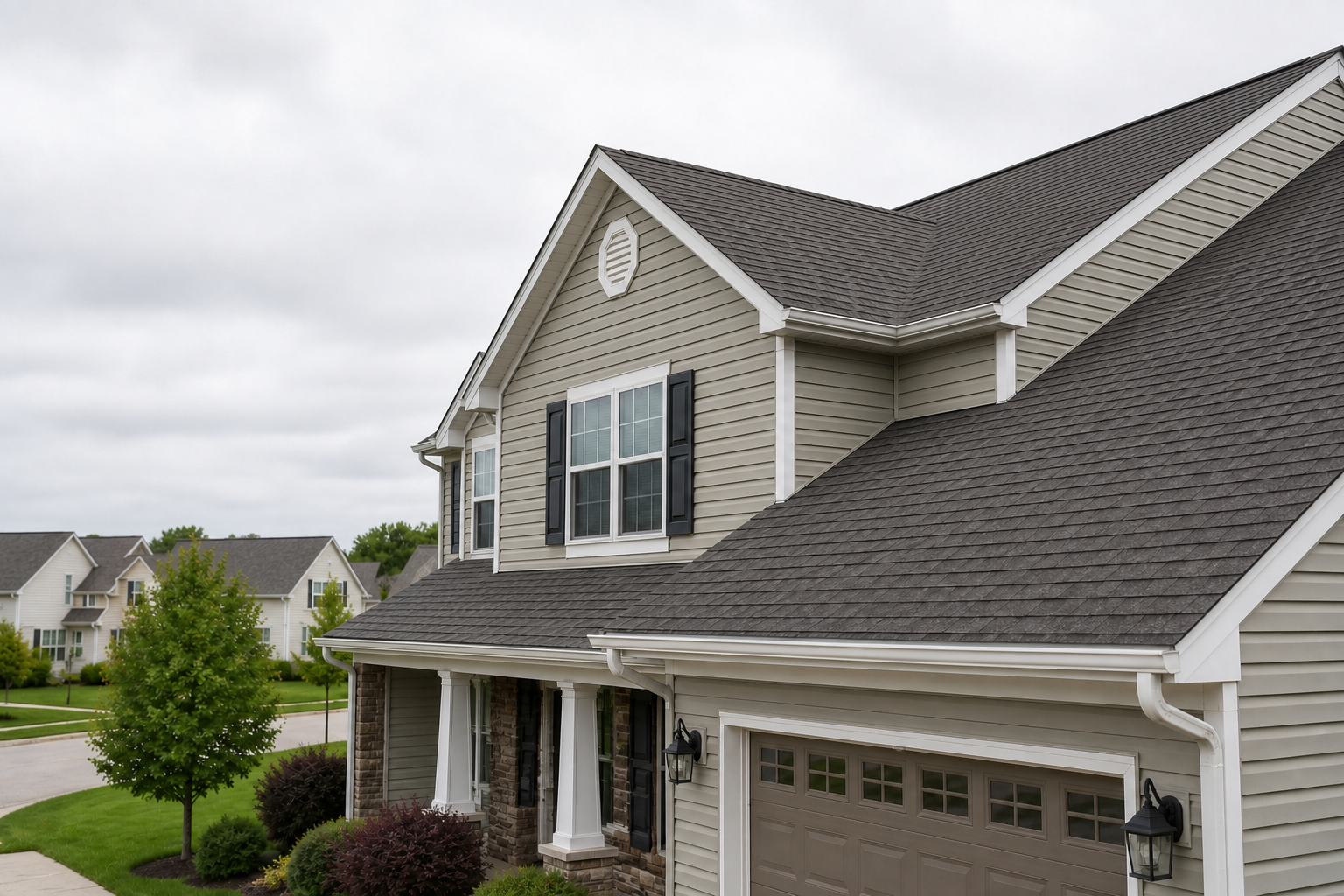
What storms do to shoreline roofs
A nor'easter brings hours of northeast wind at 40 to 60 mph with rain driven sideways. It lifts the first course at the eaves, peels back unsealed tabs, and pushes water up under ridge caps. A tropical storm brings shorter, stronger gusts from the south and southwest that hit the slopes facing the Sound hardest.
Either one drops branches. In Orange and Woodbridge, where oaks overhang most roofs, a limb through the deck is a more common storm call than lifted shingles.
First 48 hours
Active leaks are tarped first. A tarp is only useful if it is battened at the edges and extends over the ridge, so the crew brings lumber and screws, not just plastic. Photos are taken before the tarp goes on and dated, and the homeowner gets copies the same day.
Where a tree is on the roof, the tree comes off before anything else and the deck is assessed for structural damage. A cracked rafter is a framing job before it is a roofing job.
The damage assessment
Once the weather clears, the whole roof is inspected, not just the obvious spot. Storm damage often shows as creased shingles that are still in place: the tab lifted, folded back and dropped again, but the mat is broken and it will fail within a season. Creased shingles are counted per slope and marked.
The assessment separates storm damage from pre-existing wear, because that distinction determines what an insurance claim covers. A 25 year old roof with a few lifted tabs is not the same claim as a 10 year old roof with a slope stripped bare.
Working with the insurance claim
The report includes the storm date, per-slope damage counts, photos with a reference scale, and a repair scope. Adjusters in Connecticut typically want to see whether the damage is repairable by slope or whether matching is impossible because the shingle is discontinued, which can move a claim from repair to replacement. The report addresses that directly.
The homeowner deals with the carrier. The role here is to supply accurate documentation and to be available if the adjuster wants to meet on the roof.
Permanent repair
Repairs follow once the deck is dry. Lifted tabs are replaced and hand-sealed; creased slopes are stripped and re-shingled with a six-nail pattern; damaged deck is replaced; ridge caps and flashing are renewed. Where a whole slope is being redone, ice barrier and ventilation are brought up to the current standard so the roof comes out of the storm better than it went in.