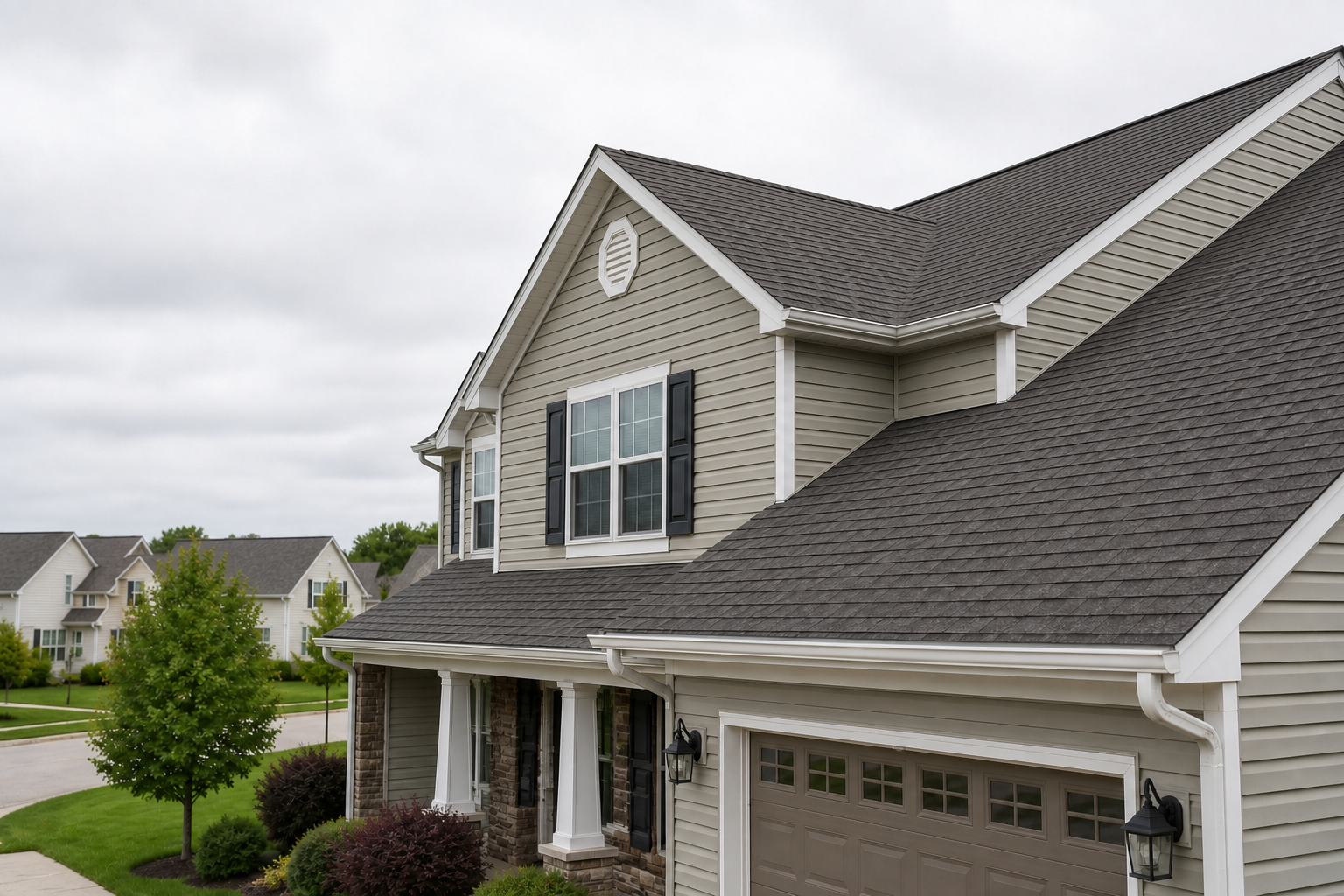
The Trumbull roof profile
Trumbull built out mainly from the 1950s through the 1980s, with pockets of newer housing in Tashua and along the Route 25 corridor. The typical roof is a colonial, raised ranch or split level with a 6 in 12 to 8 in 12 pitch, one or two layers, and gable vents that were adequate for their day but not for current insulation levels.
A lot of those roofs were replaced in the late 1990s and 2000s with three-tab or early architectural shingle. Those are now at 20 to 25 years, and the calls from Trumbull are increasingly about whether to repair one more time or replace.
Repair or replace, by the numbers
The rule applied is simple: if the roof has more than 5 years left and the repair is a fraction of a replacement, repair. If it has fewer than 5 years and the repair is significant, replace. The inspection puts a number on the years and the scope puts a number on the repair, so the decision is arithmetic rather than a sales conversation.
One pattern specific to Trumbull: many 2000s replacements were done as a second layer over the original 1970s shingle. Those roofs cannot take a third layer under code, so the next job is a full tear-off regardless, and homeowners are told that early so the budget is realistic.
Trees and shade
Nichols and Long Hill have mature tree cover and the same algae, moss and gutter debris issues as Orange. Limbs overhanging the roof are noted in every inspection with a recommendation to trim them back, because a branch scraping shingle in the wind removes granules faster than sun does.
Ventilation upgrades
Almost every Trumbull re-roof includes cutting a continuous ridge vent and confirming soffit intake, because the gable-vent-only attics run hot in summer and warm in winter. That single change extends shingle life and reduces ice dams, and it costs little when the ridge is already open during the job.
Permits and scheduling
Trumbull issues its own re-roof permit and inspects at the stage the building department sets. Jobs are scheduled around that visit and the homeowner gets the permit paperwork, deck photos and warranty registration at completion.